


Inventory is up, sellers are negotiating again, and rates are stuck in the 6s. Here’s how I’d actually think about timing a Middle Tennessee home purchase right now.
If you’ve been watching the Middle Tennessee housing market this spring, you’re probably running into the same question I’m getting from buyers almost every week:
Should I buy now, or should I wait?
It’s a fair question. Prices are still well above where they were five years ago. Mortgage rates are stuck in the low- to mid-6s. And the headlines about “shifting markets” and “buyer leverage” don’t always match what you see when you actually start looking at homes.
So let me cut through it. The honest answer isn’t “buy now” or “wait.” It’s a different question entirely:
Are you financially ready, and does today’s market give you an opportunity that fits your long-term plans?
If the answer is yes, this is one of the better windows for buyers we’ve seen since 2019. If no, waiting won’t fix the underlying issues — and may not improve your odds the way you’d hope.
Here’s how I’m thinking about it for clients buying in White House, Portland, Gallatin, Hendersonville, and the surrounding north-of-Nashville markets.
The Middle Tennessee Market Has Actually Shifted
This isn’t a vibes statement. The numbers say it.
According to the most recent monthly report from Greater Nashville REALTORS®, March 2026 closed with:
- 13,694 active listings across the region — up roughly 11% year over year
- 2,752 closings, a 3% dip from March 2025
- A median single-family price of $499,900 — essentially flat YoY
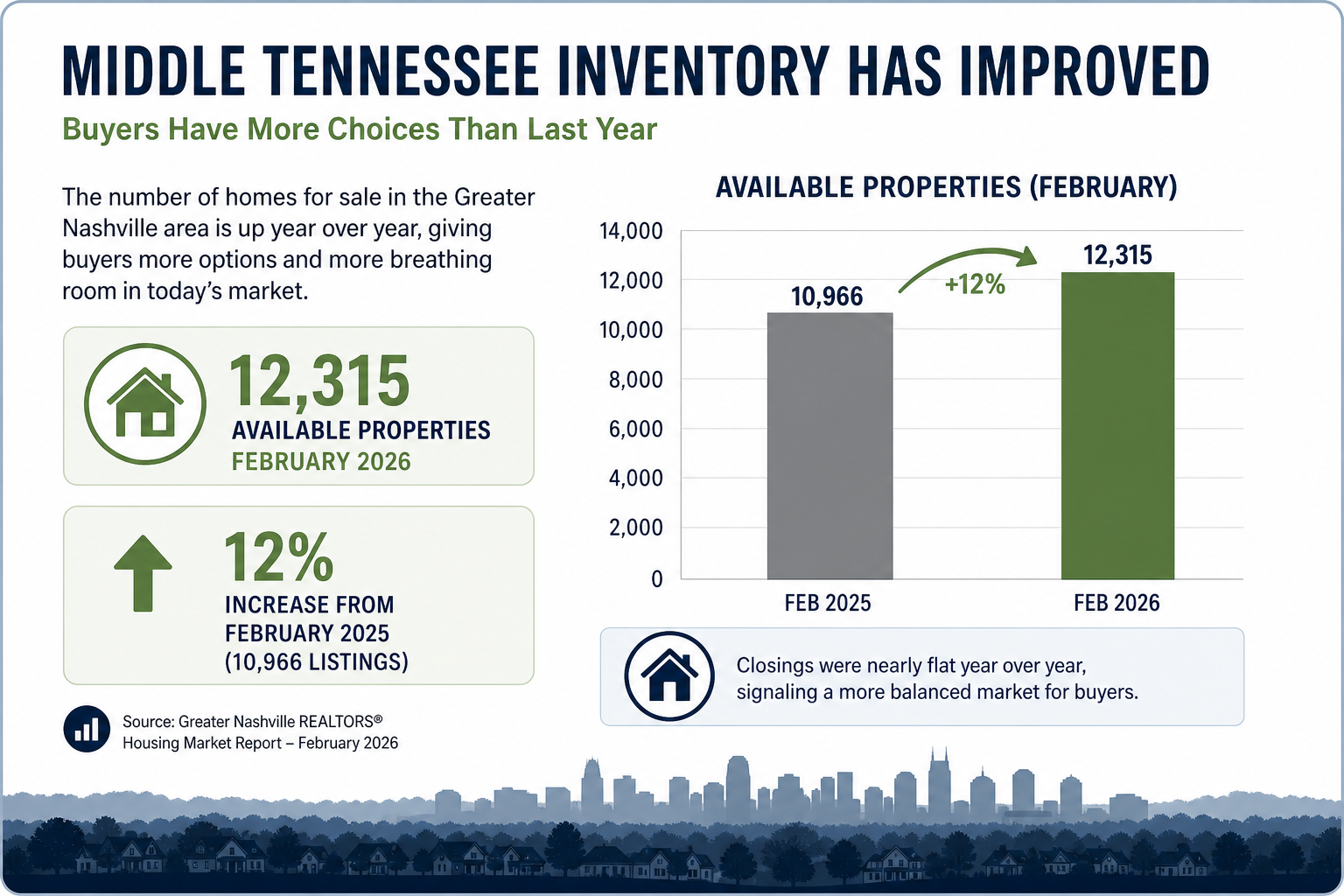
For context, February 2026 inventory was already up 12% year over year, and the trend held into March. Buyers now have meaningfully more to choose from than they did during the 2021–2022 frenzy.
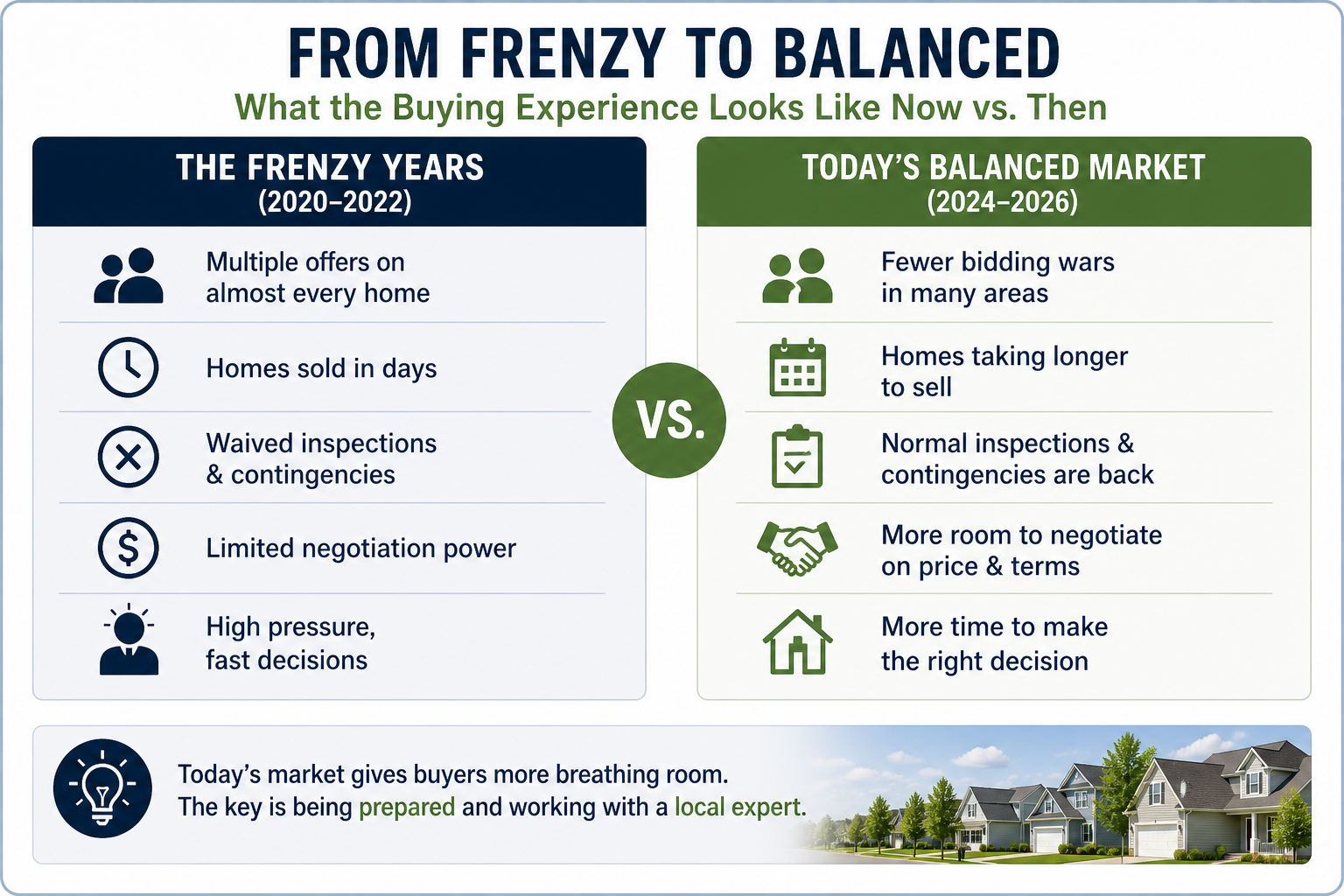
That’s a different market than the one a lot of people are still bracing for. During the hottest stretch — when buyers were routinely waiving inspections, escalating $40K over list on day one, and competing against ten or fifteen other offers — there was no breathing room. Today there is.
That doesn’t mean every home is a bargain. Well-priced homes in good condition still move quickly. What it does mean is that the average buyer has more leverage than they’ve had in years. And in a transaction this large, leverage is the whole game.
Why Buying Now Could Be the Right Move
Here’s the part I think most buyers underestimate: a softer market doesn’t just mean “lower prices.” That’s actually the smallest part of it.
The bigger benefit is negotiating room on everything else. With more inventory and slightly slower closings, sellers north of Nashville are increasingly open to:
- Price reductions (especially after 30+ days on market)
- Closing cost concessions
- Repair credits after inspection
- Rate buydowns — temporary or permanent, often the most valuable concession in a 6%+ rate environment
- More realistic inspection timelines and contingencies
- Including appliances, lawn equipment, or other items
A 2-1 rate buydown alone — where the seller pays to lower your effective rate by 2% in year one and 1% in year two — can save you several hundred dollars a month early on. That’s a real number. And in a market where the difference between qualifying and not often comes down to monthly payment, that kind of concession matters more than knocking $5K off the price.
This is especially true for buyers looking in White House, Portland, Gallatin, Hendersonville, Goodlettsville, Greenbrier, Cottontown, and the rural pockets of Sumner and Robertson County. The right home in those markets isn’t always the cheapest one. It’s often the one with the right lot, the right commute, the right school zone, and a seller who’s ready to deal.
When Waiting Actually Makes Sense
Waiting isn’t always the wrong move. Sometimes it’s exactly right.
You should probably wait if:
- Your payment would stretch your budget thin. If a 6.3% rate on the home you want creates a payment that makes you nervous, that nervousness doesn’t go away after closing. It compounds.
- Your job or income situation is uncertain. Layoffs in the area, a new role you’re not sure about, or unstable self-employment income are all reasons to wait until things settle.
- You haven’t sold your current home. Buying contingent in a market where many sellers no longer need to entertain contingencies is a tougher position than it was three years ago.
- You don’t actually know which town fits you yet. This is the big one for relocation buyers. Hendersonville, Gallatin, White House, Portland, and rural Robertson County feel completely different day-to-day. If you haven’t spent real time in each, that’s worth more than rushing to lock in a 0.25% rate change.
What I’d push back on: waiting purely because you’re hoping to “time” the bottom on prices or rates. That almost never works. The market doesn’t ring a bell at the bottom, and as I covered in my post on oil prices and mortgage rates, rate movement depends on bond markets, inflation, and geopolitics — not the calendar.
If rates do drop meaningfully into the 5s, here’s what’s likely to happen: a wave of buyers who’ve been on the sidelines for two years all return at once, inventory tightens again, and the leverage you have today disappears. The “perfect” market is usually a worse market for buyers — not a better one.
The Mistake I See Buyers Make Most
The single biggest mistake I watch buyers make right now is trying to time the entire market instead of focusing on their own situation.
The market doesn’t care what you’re paying. The market doesn’t know you’re waiting. The only thing that matters is whether the deal in front of you works for you.
A good buying decision is built on:
- Your monthly payment comfort zone (not your maximum approval — those are different numbers)
- Cash available for down payment, closing costs, and a real reserve afterward
- How long you actually plan to stay in the home
- Your commute and lifestyle needs
- Preferred school zones or community features
- The condition and resale potential of the specific home
- Whether the seller is motivated and what they’ll concede
The buyer who closes in a “bad” market on the right home and stays seven years almost always comes out ahead of the buyer who waits two years for a “perfect” market and ends up in the wrong house.
This is also why a downsizer with significant equity, a relocation buyer with a corporate package, and a first-time buyer scraping together a down payment are all in completely different situations — even if they’re shopping the same neighborhood. The right answer isn’t the same for any of them. As I covered in Housing Affordability: Policy Promises vs. Market Reality, the affordability picture for first-time buyers is structurally different than it is for repeat buyers — the typical first-time buyer is now 40 years old and represents only 21% of the market, per the 2025 NAR Profile of Home Buyers and Sellers.
What Buyers North of Nashville Should Actually Watch
This is the part most “should I buy now?” articles get wrong. They focus on national stats. The decision you’re making is local.
If you’re shopping in White House, Portland, Cottontown, Greenbrier, Springfield, or rural Sumner or Robertson County, here’s the list I walk through with every buyer:
- Septic vs. sewer. Outside the major town cores, septic is common. That changes inspection priorities, future cost exposure, and what your lot can support.
- Internet availability. This still varies dramatically. Some addresses have fiber. A mile away, the same buyer is looking at a fixed-wireless option that won’t support a remote job.
- Utility providers. Cumberland Electric, Middle Tennessee Electric, Tennessee Valley, etc. — service quality and rates differ. Same with water and gas.
- Commute routes. I-65 vs. US-31W vs. US-431 vs. Vietnam Veterans Boulevard each create completely different daily lives. A “20-minute commute on paper” isn’t 20 minutes during rush hour on the wrong corridor.
- Road expansion and growth patterns. A new road project two miles away can change a property’s value (in either direction) within a few years.
- New construction competition. In White House and Portland especially, builder inventory directly affects resale pricing. If a builder a half-mile away is offering a $20K incentive package, that’s the real comp on a resale home — not just the last sale.
- Lot size and restrictions. Outside subdivisions, look at deed restrictions, easements, and what you actually can and can’t do with the land.
- HOA rules. They aren’t all created equal. Read them before you fall in love with the house.
- School zoning. Robertson, Sumner, and northern Davidson County schools are not interchangeable. For families, this often reshapes the search entirely.
- Resale demand. Will the next buyer want this house? Specific layouts, lots, and locations resell faster than others — and that matters even if you plan to stay.
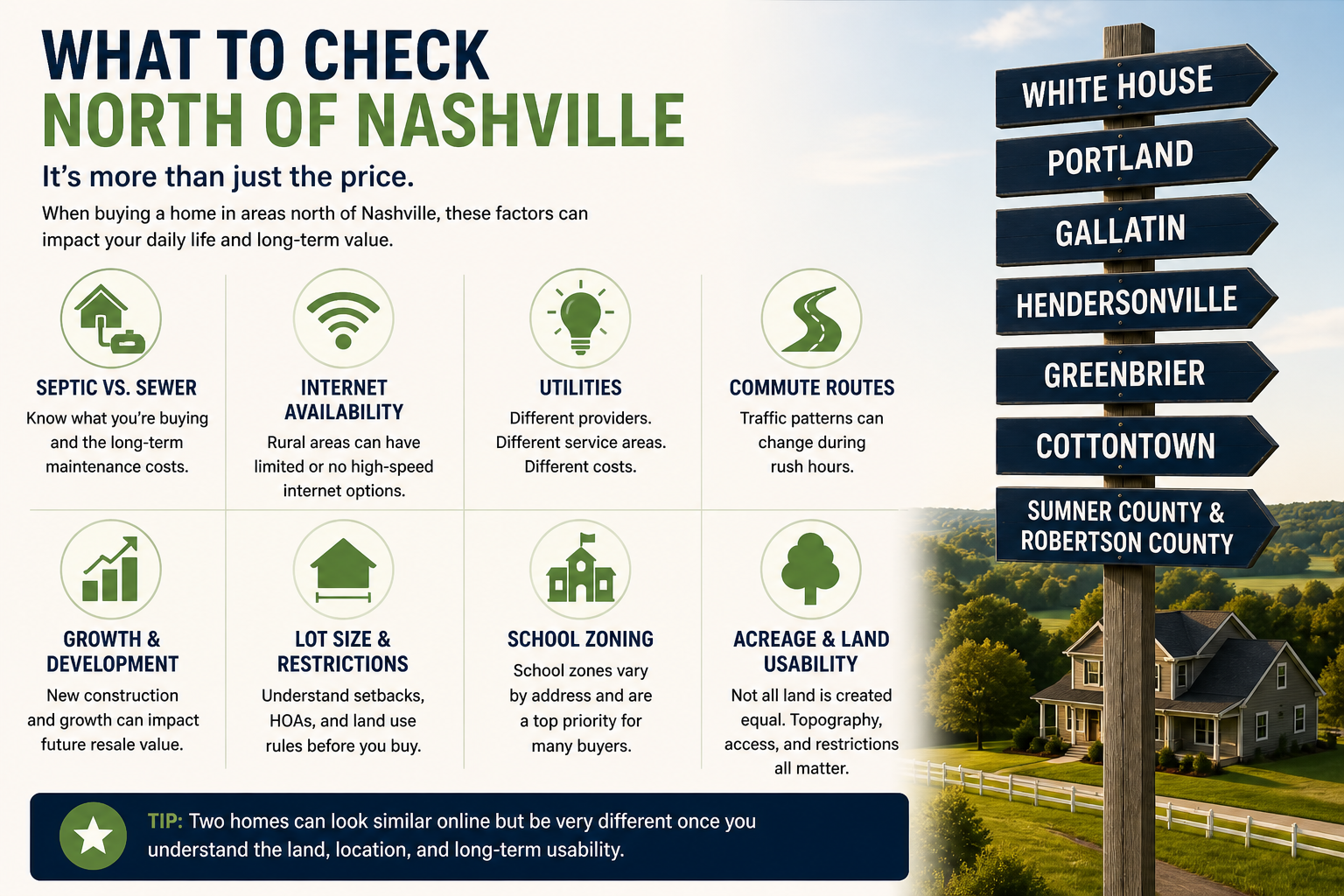
Two homes can look almost identical online and be wildly different once you understand the land, the location, and the long-term usability. The buyers who do well in this market are the ones who get past the listing photos and into the specifics fast.
If you want the local numbers behind this, the ZIP-level reports I publish are built for exactly that — see the White House 37188 report, Portland 37148, Gallatin 37066, or Robertson County overall.
So, Should You Buy Now or Wait?
Here’s where I land.
If you’re financially ready, plan to stay several years, and find a home that genuinely fits your needs — buy now. Today’s market gives you more options, more negotiating room, and more seller flexibility than buyers had any time in the last four to five years. That advantage is real, and it’s not a permanent feature of the market.
If your budget is tight, your situation is unstable, or you don’t know where you want to live yet — wait. But wait for those reasons, not because you’re trying to perfectly time prices or rates. That’s a game even professional forecasters lose.
A better strategy is to do the unglamorous work now: get pre-approved with a lender who’ll spend time with your numbers, watch the local markets that actually fit your life, and be ready to move when the right home appears.
For buyers in Middle Tennessee — and especially the towns north of Nashville — the best opportunity is rarely found by guessing the market perfectly. It’s found by knowing your numbers, understanding the local area, and negotiating well when the right home comes along.
If you want help walking through your specific situation, that’s the conversation I have all day. You can book a consult or reach me directly at (615) 491-1638.
Sources: Greater Nashville REALTORS® Market Data Monthly, Freddie Mac Primary Mortgage Market Survey, NAR 2025 Profile of Home Buyers and Sellers.
